
Finding Presence in the Chaos: Connecting More Deeply With Your Kids
If you’re anything like me, life as a work-from-home parent who also homeschools can feel like juggling a million things at once—because, let’s be real, you probably are. When I’m not working remotely, I’m homeschooling my kids. When I’m on my phone, I’m not mindlessly scrolling—I’m paying bills, placing grocery orders, completing a virtual check-in for one of the kids’ next doctor’s appointment, or managing the never-ending household to-do list. True “scroll time” is more of a rare treat than a daily habit. Life is full, nonstop, and often chaotic, but I’ve discovered something powerful: how I connect with my kids in those moments truly matters.
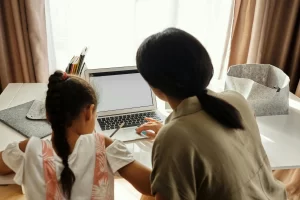
I’m not just talking about using a gentle tone—this isn’t a lesson on gentle parenting. I mean truly engaging with your child in the moment. Being present.
One Simple Shift That Helps Homeschooling Parents Stay Present
Putting my phone down (like, actually face down) and making eye contact when my kids talk to me—and waiting until they look away before I get back to what I was doing.
That’s it. That tiny decision shifted something in our homeschool and work from home life.
When we pause long enough to make eye contact, our kids don’t just hear our words—they feel our attention. They learn that what they say is important, that they aren’t just competing with a screen, a homeschool routine, or a work to-do list. And when they finally look away, satisfied with our response, they aren’t left questioning whether we were really listening.
It reminds me of what often happens with my oldest. She’s often wants me to see what she’s doing—even if it’s the fifth rock she’s shown me that looks “a coconut from Moana.” When we’re outside and the kids are playing, I get called on a lot to witness some not-so-entertaining things. And still, I do my best to look up each time with genuine interest
Because I know, without a doubt, that in those moments, I’m helping her feel heard and valued.
She’s not just sharing the rock or the stick or the chalk drawing—she’s sharing herself.
And as the oldest, I think she also craves a deeper kind of connection. Sometimes she just wants to have a real conversation with someone who isn’t a toddler or preschooler. Even if what she’s saying seems small, the need behind it is valid.
So I look. I ask a question. I engage—because those are the moments that build trust between us. Those are the moments that remind her she matters.
Modeling Respect and Presence at Home
And when I think about it, I’m also modeling something important: how to show respect when someone is speaking. By making eye contact and listening with intention, I’m teaching my children how to do the same—whether it’s during homeschool lessons or everyday life at home.
They are constantly picking up on social cues, using our everyday interactions as their guide. Whew! Talk about pressure!
Have you ever seen that quote that says something along the lines of, “When a child hugs you, don’t be the first to let go”? I think the same applies to eye contact with our kids. Holding that moment just a little longer shows them they have my full attention. It tells them: I see you. You’re important. I’m here.
It’s such a subtle shift, and yet the ripple effect is enormous. Because these moments stack up. Over time, they build trust. They shape how our kids learn to share their thoughts, how they open up, and how they relate to others.
Responding Slowly: Teaching Kids Their Words Have Value
Another shift I’ve made is not rushing to respond. I get really excited about this one because when I do it, I feel like I’m truly showing up as the parent I want to be. It’s easy to default to quick replies—“Oh, cool!” or “That’s nice!”—but taking a breath before responding does two things:
1. It slows my own mind down. Instead of jumping from task to task and answering on autopilot, I get a moment to be present.
2. It teaches my kids that their words deserve thought. When I pause, consider, and then respond, they feel heard—something every homeschooling parent working from home can appreciate.
Sometimes I’ll even ask a follow-up question, like, “Wow, how do you think you get the coconut water out of the coconut?”—not because I have time to dive into a long conversation, but because I want them to know I value what they’re sharing and talking to me.
Why Parent-Child Connection Matters (Backed by Research)
This isn’t just about warm fuzzies or trying to be a “perfect parent”. There’s solid research behind the importance of emotional connection.
Here are a few things that stood out to me:
- Children who feel securely connected to their caregivers are better able to manage stress and bounce back from challenges—that’s resilience. (Harvard Center on the Developing Child)
- A strong parent-child bond reduces the risk of mental health struggles. One recent CDC study found that students who feel connected to their parents are nearly 50% less likely to experience poor mental health. (Youth Risk Behavior Survey, 2021)
- Connection boosts confidence and empathy. A 20-year longitudinal study found that warm, emotionally available parenting led to higher self-esteem, better relationships, and more emotional intelligence in kids. (Child Development Journal, 2010)
So when we slow down to connect, ask a thoughtful question, or give our child our full attention, we’re strengthening both the parent-child connection and the homeschool balance that shapes family life.
Simple Curiosity Questions for Homeschool and Everyday Life
Another way I try to stay connected—especially when life feels extra full—is by asking thoughtful questions. Whether it’s during a car ride, bath time, while folding laundry, or in the middle of a homeschool routine.
Below are some simple questions you can ask to connect more deeply with your kids—emotionally, imaginatively, and relationally.
Tip: Copy and paste this list into a note on your phone so it’s easy to reference throughout your week.
Simple Questions That Build Connection
Emotional Check-Ins
- What was the best part of your day today?
- Did anything happen that made you feel sad or upset?
- If your feelings were a color right now, what color would they be?
- Is there anything on your mind you want to talk about?
- What made you smile today?
Imaginative Prompts
- If today was a story, what would the title be?
- If your heart could talk, what would it say right now?
- If your thoughts were animals, what kind would they be today?
- What would you do if you had a whole day to do anything you wanted?
- If you could send a message to yourself from this morning, what would you say?
Connection Builders
- What’s one thing I do that makes you feel really loved?
- What’s something you wish grown-ups understood better?
- What’s your favorite thing we do together?
- How do you know someone really sees you?
- Is there something I could do differently to help you feel happier or calmer?
Self-Reflection Starters
- What’s something you’re proud of today?
- What helps you feel brave when something is hard?
- What’s something you’re trying to get better at?
- When do you feel most like yourself?
- When you feel frustrated, what helps you calm down?
You don’t have to ask all of them—just one thoughtful question can say, “I see you. I’m listening. You matter.”
Presence Doesn’t Mean Perfection for Work-from-Home Parents
Now, before you start feeling like you have to drop everything every single time your child speaks—take a breath. Presence doesn’t mean perfection.
This is way less about being “on” 24/7 or making every moment magical and way more about creating touchpoints throughout the day where our kids feel seen and safe.
What Presence Looks Like in Different Homeschooling Seasons
To keep things in perspective, presence will certainly look different depending on the season of life you’re in.
With a newborn in the mix, maybe it’s just one intentional moment a day—and for homeschooling parents working from home, that’s more than enough.
Again, being present doesn’t need to mean hours of undivided attention.
Some days, presence looks like reading together. Other days, it’s dancing in the kitchen or sitting quietly next to them while they draw. And some days, presence looks like a deep breath and a gentle “I’ll be right there” when you’re in the middle of something important.
Balancing Work, Homeschool, and Family Connection
Of course, the reality is that there’s always something to do—especially when you’re balancing homeschooling and working from home with kids.
But choosing intentional moments—putting down the phone, making eye contact, pausing before responding—helps us balance being present with getting things done.
It’s not about doing everything right. It’s about doing the little things with care. Over time, those little things add up to a lot.
So the next time your child calls your name to look at something, consider these small shifts:
• Put your phone down.
• Make eye contact.
• Listen.
• Pause before responding.
• Wait until they look away before you move on.
Small shifts, but the hope is that these are the moments our kids will remember.
I’d love to hear – what does presence look like in your home? What helps you stay present with your kids during the chaos of everyday life?