
Homeschool While While Working Full Time: A Month in Our Real-Life Routine
How We Approach Homeschool While Working Full Time
As a full-time remote working mom of three, balancing homeschool while working full time isn’t about perfect daily schedules. Homeschool isn’t built in a day — it’s built in rhythms, steady skill-building, and intentional learning. By looking at what our homeschool actually looks like over a month, you get a holistic view of how learning, creativity, and life skills intersect, without rigid timelines or Pinterest-perfect routines.
Here’s a realistic glimpse into our month — the moments, activities, and routines that make up our full-time homeschool life while I work from home.
This post may contain affiliate links. Please read our full disclosure HERE.
Biweekly Pen Pal Letters Build Communication, Reading, and Writing Skills
Every 2–3 weeks, our two oldest kids receive a letter from my aunt — a monthly highlight.
Inside the envelope:
- A handwritten letter
- A small activity torn from a larger activity book (mazes, letter tracing, or other exercises)
- A prompt for response and conversation
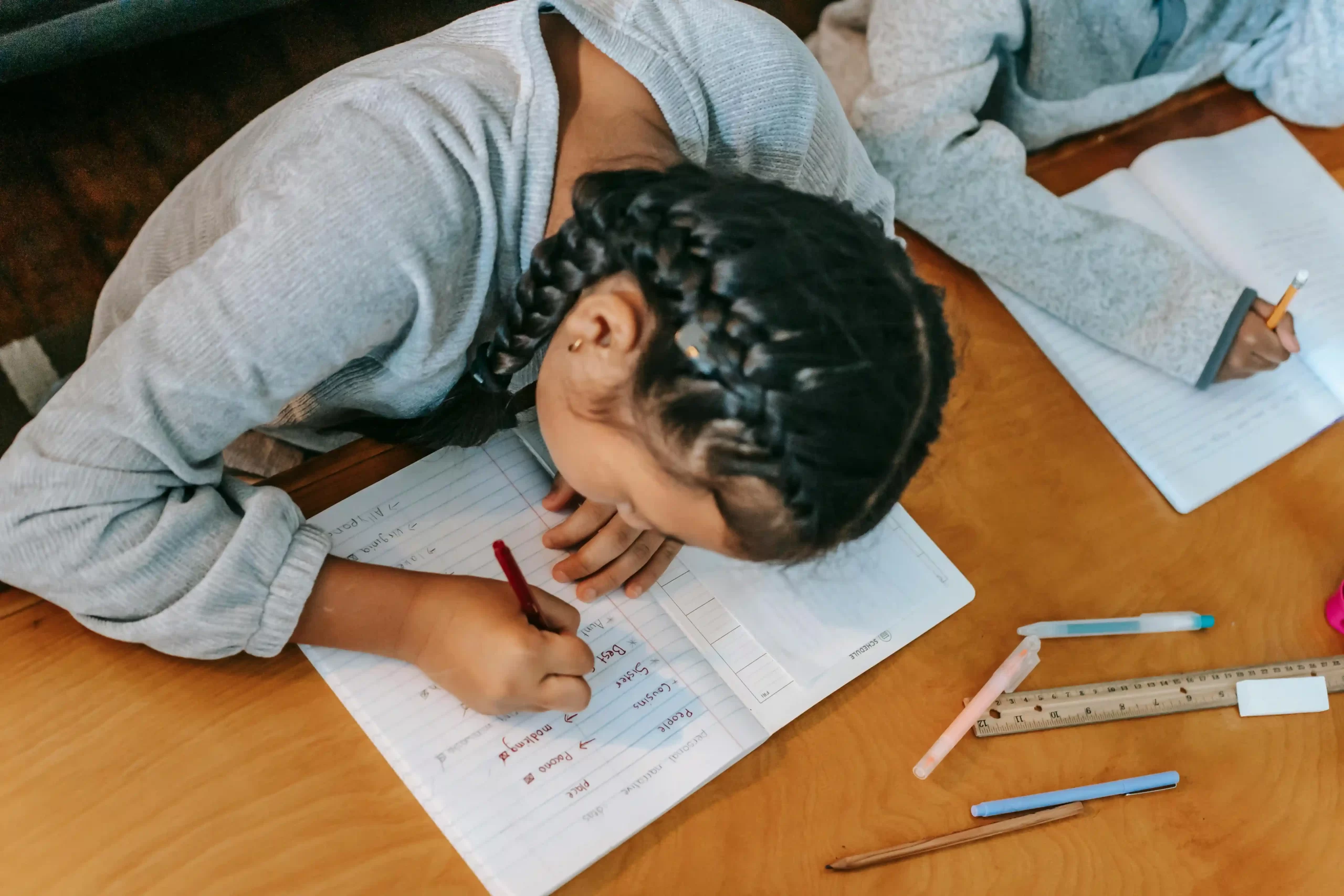
Letter writing is very much core curriculum. I’ve been so pleased at the progress our oldest has made. She started off needing full support to respond to letters, and now she reads them independently, knows exactly how to answer questions, and even thinks of ways to take the conversation further.
Through this ongoing activity, she is strengthening:
- Reading comprehension
- Writing and sentence formation
- Critical thinking
- Conversational skills
- Initiative and independence
Their ongoing correspondence has been incredibly effective for developing multiple academic and soft skills in a real-world, meaningful way. I am so grateful for this steady pillar of their homeschool curriculum.

Biweekly Library Trips Build Joy and a Love for Reading
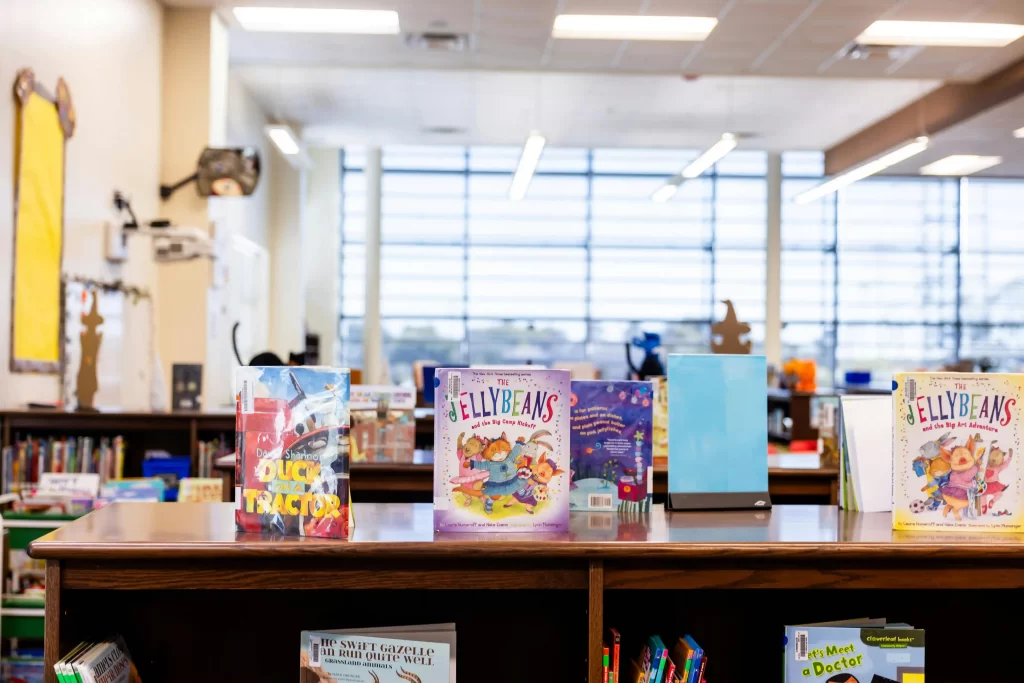
Our biweekly library visits are designed to nurture excitement for reading, not just practice skills.
We typically:
- Read each book 1–2 times over a two-week period
- Pause to discuss vocabulary or ideas
- Talk through characters and storylines
For our six-going-on-seven-year-old, this enhances reading fluency and comprehension. For our three-year-old, it’s all about building upon her soft skills, finding joy in books and early literacy. The library’s craft kits also support hands-on learning: painting, cutting, gluing, and creating imperfect art — fostering creativity and delight.
Monthly Core Topic Studies: Solar System Exploration
Each month, my husband takes the lead in guiding the kids through a core topic.
When I have work that limits my homeschooling time, I am especially grateful for the deep dives he takes on various topics – gardening, nature’s habitats, or most recently, the solar system. Our three-year-old has retained an incredible amount of knowledge, and our six-year-old has been equally excited – she even asked us to give her a “test”.
Although she’s not required by law to take formal tests yet, this has been a gentle way to introduce testing knowledge in a non-scary, confidence-building way.
Monthly core topics like this allow for:
- Math connections (planet sizes, distances, galaxies and the quantity of stars)
- Science exploration (atmospheres, gravity)
- Writing (creative writing or facts of planets)
- History (space exploration over the years)
It’s a natural way to learn in layers over the month, reinforcing curiosity and understanding.
Work-Friendly Learning Activities for Busy Months
In addition to unit studies and library reading, I incorporate learning tools that require minimal oversight:
- Reading comprehension workbook (completed over an average of three to six months)
- New grade-appropriate workbook started this month for independent learning
- Monthly thematic projects — for example, in honor of Women’s History Month, our oldest is selecting a book from her Little People, Big Dreams collection to write a paragraph about an inspiring woman. An added bonus is when she reads to her little sister.
These activities naturally fit into pockets of time across the month, maintaining learning momentum while I balance full-time work.
Sustainable Extracurricular Activities
To avoid burnout and to allow for a change of pace, we incorporate a number of monthly extracurriculars:
- Weekly karate for our oldest
- Preschool acting class for our three-year-old
- Horseback riding for our two oldest (once a month, spring through fall)
- Zoo membership visits as we can fit them in. Pro Tip: To help make homeschool more affordable, check out your local library to inquire about a zoo pass.
This sort of monthly scheduling keeps activities joyful and just importantly, sustainable, reinforcing the importance of long-term consistency over weekly perfection.
Daily Soft Skills: Building Confidence Over Time
Beyond academics and activities, a key focus in our home is resilience and confidence.
For example: At the park, my oldest asked a child to play twice. When politely rejected, she turned to her little sister: “Well, they want to play by themselves. You and I can go down the slide together.”
Watching her confidently introduce and extend herself and moments later, without missing a beat, decidedly not dwelling on the rejection was such a proud moment for me. Moments like this, observed over weeks and months, reflect the cumulative impact of homeschool on social and emotional skills.
Daily Academic Routines Strengthen Mastery
For our three-year-old:
- Safety information (name, age, birthday, address, details about family members)
- Letter recognition and Early reading readiness
- Soft Skills
For our six-year-old:
- Daily writing (creative stories, adjective lists)
- Reading fluency
- Spelling
- Math drills (doubles, long addition/subtraction, skip counting – playing ‘grocery store’ with pretend money is a favorite in our home)
- Flexible math curriculum for concept reinforcement
Using tools like a dry erase board for daily math, we maintain mastery over the course of the month, ensuring steady academic progress.
Life Skills Are Learning
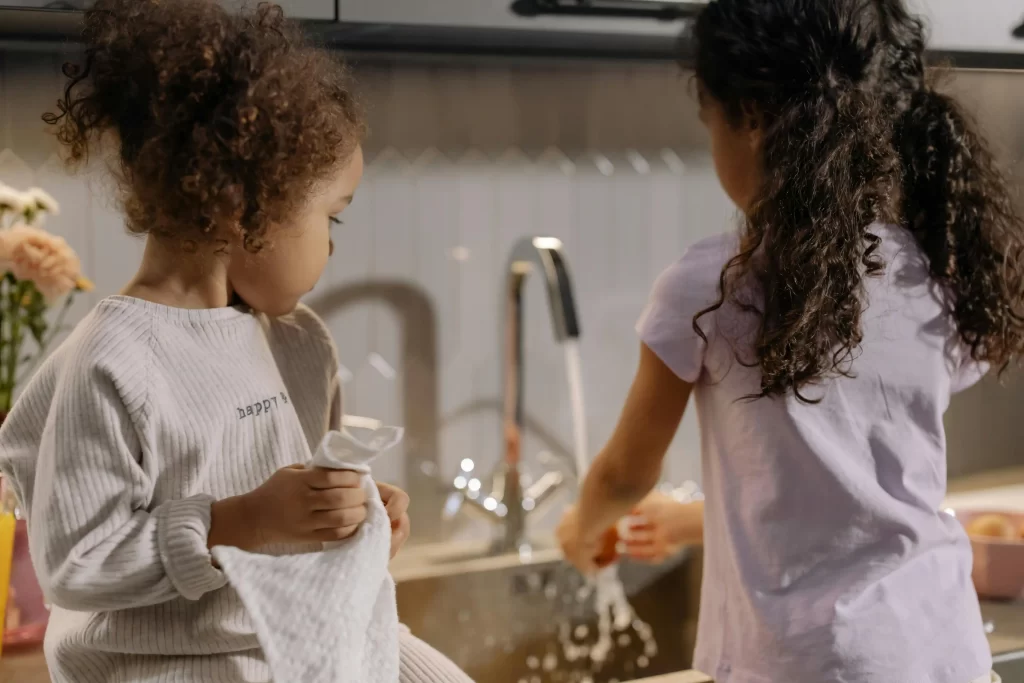
Monthly homeschool also includes a steady focus on maintaining and caring for a home:
- Folding rags and towels
- Vacuuming
- Wiping baseboards
- Helping in the kitchen
Chores are practical skill-building, reinforcing that education extends beyond worksheets.
A Monthly View Brings Confidence
By looking at the month as a whole, you can see:
- Letters sent and responded to
- Books finished
- Skills strengthened
- Interests explored
- Confidence growing
If you’re new to homeschooling — or wondering if you’re doing it “right” — I hope that by seeing a glimpse into a month in the life of our homeschooling flow offers a new perspective on the many learning opportunities possible over a month’s time.