

Why We Chose to Homeschool: A Heartfelt Look at Our Family’s Journey
Why We Chose Homeschooling
Homeschooling has been on my heart since I was pregnant with our first child nearly seven years ago.

From the beginning, I wanted to pour into her from my own heart—offering a richer history than I ever learned in school, guiding her toward her natural interests, and nurturing her emotional world in a way only her father and I could.
Of course, life brings challenges, and I know we can’t shield our children from everything. But I wanted her to form her identity through love, curiosity, and nature—not from constantly navigating poor influences or careless words from overstretched adults. The idea of her growing into herself, not shrinking to fit into someone else’s idea of who she should be, really stuck with me.

Of course, life brings challenges, and I know we can’t shield our children from everything. But I wanted her to form her identity through love, curiosity, and nature—not from constantly navigating poor influences or careless words from overstretched adults. The idea of her growing into herself, not shrinking to fit into someone else’s idea of who she should be, really stuck with me.
Her dad and I have different but equally strong reasons for choosing this path. He was incredibly gifted in math as a child. A teacher once wrote home recommending he join the gifted program, and he dreamed of being an architect. Though, without enough tools available, his life took a different path, and he entered the military at 22. He’s now gone back to school, pursued creative workshops, and never stopped dreaming. Still, that “what if” lingers.
As for me, I’ve always loved teaching. My childhood was spent buried in books, and one of my earliest dreams was to open a school for children. So, yes, part of our choice to homeschool is simply that teaching feels like a calling for me. It’s also something I do professionally.
When our daughter was still a toddler, my husband and I wrote down our reasons for wanting to homeschool. We wanted to be clear and intentional. One of his reasons? Better food. I laughed at first—but it’s true. Our kids get home-cooked meals almost every meal. We do grab lunch out often, but I love that breakfast and dinner are almost always prepared right in our kitchen.
Another shared reason: the freedom to travel. We dream of visiting multiple countries before our kids turn 18. So far, we’ve made one international trip, but local camping trips and exploring national and state parks have been deeply fulfilling. We want our children to experience the world beyond the classroom.
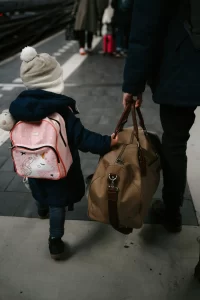
And as time goes on, our reasons continue to evolve. One of the most beautiful surprises has been watching how our children form deep, meaningful bonds with one another. There’s something instinctively comforting about siblings truly knowing and looking after each other—it taps into a primal sense of security.
Homeschooling also gives us the time and space for things we’d struggle to fit in otherwise—like horseback riding lessons, growing food, or learning how to properly cook and clean. These aren’t just hobbies. They’re life skills. Okay, maybe I have a not-so-secret dream of running off to the mountains, living off the land with a few horses, and a beautiful river running through the property – but hey, teaching out kids to thrive in everyday life is good too. (I’d have to rely entirely on my husband to grow our food. He’s got the green thumb – I’m more of a ‘cheer from the porch with coffee’ kind of gardener.)

One of my favorite parts? Our days aren’t dictated by bells, pickups, or rushed mornings. We learn all day, every day—not with constant worksheets or rigid structure—but through conversation, exploration, and connection. Children are always absorbing. Every moment is a chance to pour in love and good information.
Homeschooling definitely isn’t about trying to create a perfect life. It’s just about building one rooted in the hopes and dreams you have for your family.
Do you homeschool? On the fence? What’s your ‘why’?
You Can Start Small and Grow Into It
One of the most freeing truths about homeschooling is that you don’t have to launch with a full curriculum, a detailed daily schedule, or a Pinterest-perfect classroom!
You can start small and grow into it.
Especially if you’re beginning with young children, short, focused bursts of learning are actually best. Twenty to thirty minutes of reading, exploring letters, building with blocks, or asking curious questions together—that’s enough. Learning doesn’t need to be forced. It needs to feel doable.
In the early years, it’s less about lesson plans and more about building a rhythm:
- Reading together during breakfast
- Counting while putting away groceries
- Talking about emotions after a tough moment
- Taking a walk and discussing animal habitats or naming the clouds
- Reviewing your home address during car rides—especially quick routes like grocery pickup, grabbing takeout, etc.
These little things are learning. And as your confidence grows—and your child gets older—you’ll naturally find yourself ready to add in more structure, activities, or subjects! Try thinking of homeschooling as a relationship – both with your child and with learning.
If you’ve been feeling the tug toward homeschooling but feel intimidated by everything it seems to require, start here: What’s one small way I can lean into learning with my child this week?
That’s enough to begin. ?
A Gentle Homeschool Rhythm (For Young Children)
If you’re someone who likes a visual, or you need a place to start—here’s a simple daily rhythm based on how learning naturally fits into real life.
It’s not rigid nor perfect – just something you can adjust based on the flow within your home (and ages of your kids of course).
| Time | Activity | What They’re Learning |
| 9:00 AM | Breakfast & Read-Aloud | Language, Listening, Bonding |
| 10:00 AM | Nature Walk or Backyard Play | Science, Observation, Gross Motor Skills |
| 11:00 AM | Letter Tracing, Building Blocks, or Matching Game | Fine Motor, Pre-Literacy, Focus |
| 11:30 AM | Snack & Chat (Anything is okay) | Social-Emotional Awareness, Communication |
| 11:00 AM | Grocery Pickup – Talk About Home Address | Safety, Memory, Practical Life Skills |
| 11:30 AM | Free Play or Simple Art Project | Creativity, Imagination, Self-Directed Play |
| 12:00 PM | Lunch & Chat (Anything is okay) | Social-Emotional Awareness, Communication |
| 1:00 PM | Quiet Time / Storytime / Nap | Listening Comprehension, Reflection, Rest |
Want to print this for your fridge? Here’s a free downloadable version – leave me a comment if you have any issues using the template.
Thinking About Homeschooling? Here’s How to Start
If homeschooling is on your heart, but you’re unsure where to begin, here are a few approachable steps that can help:
- Get familiar with your local homeschool laws.
Every state (or country) is a little different. Some require notice of intent, a portfolio, or testing—others don’t. A quick visit to HSLDA.org can show you what’s required where you live. - Start with 20–30 minutes a day.
Especially with young kids, short and consistent learning times are enough. Read a book together, explore nature, practice letters with sidewalk chalk—learning doesn’t have to look like a classroom. - Notice what your kids are curious about.
A love of space or insects or trucks can become a whole week of learning. You don’t have to follow a strict curriculum from day one. Let their interests lead. - Find a local or online homeschooling community.
Connection helps. Whether it’s a Facebook group, a local co-op, or a few families at the park, having other homeschoolers around can provide encouragement, ideas, and friendship. Note: In my experience, involving myself in existing homeschooling groups has been so helpful in making sense of some of the homeschooling requirements. I tend to overthink (not wanting to do miss any requirements) and it’s been SO helpful learning from more experienced homeschooling families. - Trust what you already know.
If you’ve taught your child how to hold a spoon, say “thank you,” or tie their shoes—you’ve already been teaching. You do NOT need to be a trained teacher to successfully facilitate their learning.
Homeschooling by the Numbers
Homeschooling is no longer an outlier. It’s becoming a mainstream option for millions of families—and for good reason.
- As of the 2021–22 school year, around 3.1 million U.S. students (about 6% of all K–12 children) were homeschooled.
- Some reports estimate that number rose to 4.3 million in 2022, and is holding steady around 3.7 million in 2024—close to 7% of the total school-aged population.
- Homeschooling has grown by more than 50% since 2019.
(Sources: NHERI, Pew Research)
Why Are Parents Choosing Homeschool?
According to Pew and NHERI:
- 83% cite concerns about the school environment (bullying, safety, peer pressure)
- 75% want to provide moral instruction
- 72% seek more family time and flexibility
- 72% are dissatisfied with traditional academics
- 53% cite religious values
- 50% want a non-traditional approach to learning
- Over 88% say they feel better equipped to personalize learning
- More than 70% plan to continue homeschooling the following year
These numbers reflect what so many of us are feeling: a desire for a home-centered, intentional, and flexible approach to education.
Helpful Resources
Looking to dig deeper? Here are some great places to begin:
- HSLDA.org – Understand your state’s homeschool laws
- NHERI – Research-backed insights on homeschooling outcomes and growth
- Pew Research: A Look at Homeschooling in the U.S. – Data on who’s homeschooling and why