
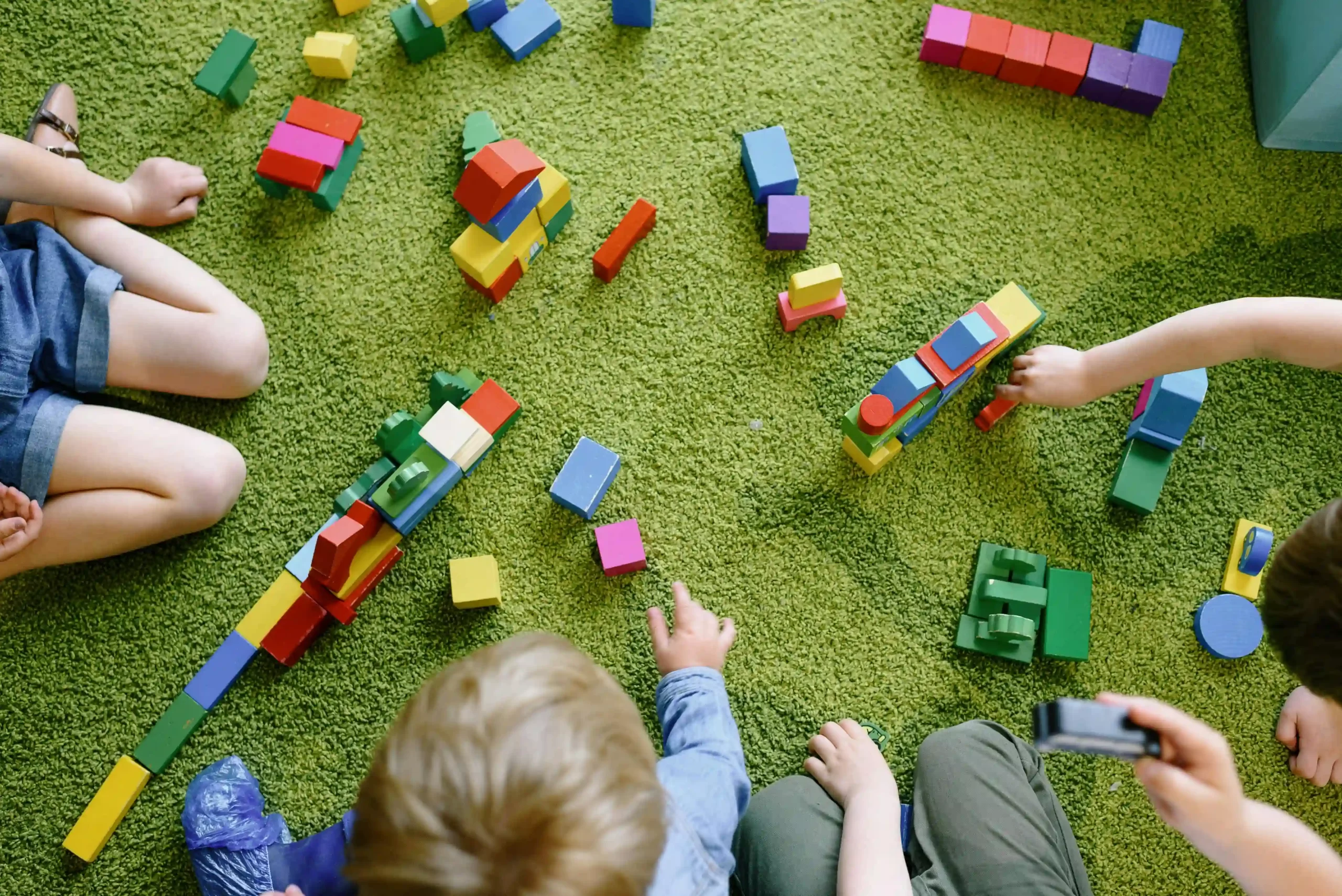
The Truth About Socialization: Why Homeschooling Doesn’t Hold Kids Back
Debunking the Socialization Myth
If you homeschool, you’ve probably heard it:
“But what about socialization?”
It’s one of the most common concerns people raise—as if homeschooling means isolation. But this question reflects a misunderstanding of what socialization actually is—and how it develops.
Historically, children were educated in the home for centuries. Public schooling is a relatively recent invention. And yet, somehow, people managed to build civilizations, write great literature, and contribute to society—without a classroom full of same-age peers.
Today’s homeschooled children are anything but hidden away. They’re out in the world—visiting libraries, museums, karate lessons, grocery stores, and playgroups—interacting with people of all ages in real-life settings.
In fact, research shows that homeschooling does not hinder social development. In a review of 15 studies, 13 found that homeschooled children demonstrated more positive social behaviors than their traditionally schooled peers (Ray, 2017, National Home Education Research Institute). Another study published in the Peabody Journal of Education found that homeschooled children often show stronger leadership skills, higher self-esteem, and lower rates of problem behavior than school-attending peers (Medlin, 2000).
Homeschooling allows for rich, relationship-based learning—something that supports socialization, not undermines it.
What Is Socialization, Really?
Let’s take a moment to separate two concepts that often get used interchangeably:
- Play
- Socialization
Play is essential. Especially pretend play, which helps children practice negotiation, storytelling, turn-taking, and perspective-taking. Peer friendships can also be a source of joy, creativity, and connection.
But play is not the same thing as socialization.
Socialization is the process through which a child learns to:
- Communicate clearly & Listen respectfully
- Show empathy, Regulate emotions & Resolve conflict
- Adapt to social norms & Adjust behavior in different environments
- Function confidently in a community & Communicate across age groups, authority levels, and personalities
It’s not just being physically near other children. It’s about the quality of interactions and the range of relationships.
The idea that kids need to be surrounded by dozens of same-age peers every day to be “properly socialized” is not supported by developmental research. In fact, much of a young child’s social learning takes place through modeling, language exposure, and relationships with responsive caregivers (American Academy of Pediatrics, 2006).
Additionally, Attachment theorists like John Bowlby and Mary Ainsworth emphasize that a secure, loving connection with caregivers is foundational for developing empathy and self-regulation.
So, according to research, these skills are best developed through ongoing relationships where children are seen, heard, and responded to—not in crowded peer settings where adults may be overextended or unavailable for deep guidance.
Toddlers Don’t Need a Room Full of Toddlers
Let’s clear up another misconception: that toddlers need a classroom of other toddlers to become socialized.
Child development experts agree that toddlers learn social behavior in stages:
- Solitary play
- Parallel play
- Associative play
- Cooperative play
Parallel play—where children play near each other but not necessarily with each other—is completely normal for toddlers. Cooperative play tends to emerge around ages 4–6, depending on the child.
In the toddler years, social-emotional skills like turn-taking, impulse control, and language development grow primarily through consistent adult interaction, not same-age peer interaction (American Academy of Pediatrics, 2006). When you talk with your toddler, model manners, resolve conflicts together, and play simple games, you’re actively building their social muscles.
So, if you’re home with your toddler reading books, chatting over lunch, or helping them navigate feelings—you’re doing the work of socialization.
That said, let kids play—but don’t mistake that for the entire picture of social growth. Especially in the early years, you are their primary social model.
Confident Communication Starts Early
One of the most surprising benefits of homeschooling is how comfortable kids become communicating with adults. They’re not shy about asking questions, speaking clearly, or engaging in thoughtful conversation.
This doesn’t mean they’re “butting in”. It means they’re practicing real-world communication—a skill they’ll use forever.
At our house, we try to make plenty of space for our children to:
- Pay for items at the store (granted there’s not a long line behind us)
- Order their meals at restaurants
- Ask librarians or coaches for help
It slows us down a little but these moments matter. They give children real practice in expressing their needs, adjusting tone, reading social cues, and resolving minor challenges.
Personally, I spent years early in my career feeling nervous speaking up in meetings. I was usually the youngest in the room and hadn’t had much practice speaking with adults growing up. Most of my early social world was peers—and that left me underprepared. That’s why I see the mixed-age interactions my children experience—older and younger siblings, adults of all kinds—as a strength of homeschooling, not a limitation.
If my children leave our homeschool with just one essential skill, I hope it’s this: The confidence to communicate clearly, effectively, and comfortably with anyone.
Real-Life Socialization in Homeschooling Homes
Let’s look at what social development actually looks like in a homeschooling environment:
- Sibling relationships are powerful. Our older children are learning patience, nurturing, and leadership just by caring for their baby brother each day.
- Professional exposure. I work remotely, and sometimes my children overhear virtual meetings or join informal “coffee chats”. They’re already getting a feel for how people speak and work in corporate spaces—long before they’ll ever set foot in one. I love this for them!
- Extracurriculars. From karate to horseback riding, our kids follow instructions from other adults, work as a team, and form meaningful peer relationships.
- Library independence. Weekly, my kids return books, chat with the librarians, and check out new ones—all on their own while I trail behind.
- Everyday encounters. At the bank, the post office, the grocery store—our homeschoolers interact with people of all ages, learning how to handle a variety of social situations.
What I love so much is that socialization through homeschooling is authentic. It’s woven into the fabric of real life—not scheduled into one 20-minute block on a school timetable.
Further Homeschooling Socialization Statistics
The research is clear: homeschooled children are not socially behind. If anything, they’re often ahead.
- A meta-analysis found that 87% of homeschooled adults report being involved in community life and civic engagement (NHERI, 2021).
- In a 2000 study, homeschooled children scored above average in areas of self-concept, leadership, and communication (Medlin, Peabody Journal of Education).
- Dr. Peter Gray, in Free to Learn, explains how mixed-age play and autonomy in homeschool settings foster independence and social competence.
- Marilyn Wedge, PhD, notes that homeschooling allows for strong emotional attachments that serve as a foundation for lifelong social-emotional health.
The myth of the “unsocialized homeschooler” doesn’t stand up to the evidence.
My Advice: Trust the Process
If you’re homeschooling—or considering it—please know this:
Your children are not missing out.
They’re learning how to:
- Express themselves
- Ask thoughtful questions
- Respect others’ boundaries
- Talk across generations and backgrounds
They’re doing this not just at recess or on the weekends—but all day long, alongside you.
We don’t need to ask, “Are they socialized?”
We should be asking, “What kind of social person are they becoming?”
And chances are, if you’re intentional about your time with them, they’re becoming something wonderful!
Works Cited
- Medlin, R. G. (2000). “Home schooling and the question of socialization.” Peabody Journal of Education, 75(1-2), 107–123.
- Ray, B. D. (2017). “Research Facts on Homeschooling.” National Home Education Research Institute (NHERI).
- American Academy of Pediatrics (2006). “The Importance of Play in Promoting Healthy Child Development.”
- Gray, P. (2013). Free to Learn. Basic Books.
- NHERI (2021). “Homeschooling and Socialization Research.”
- Wedge, M. (2011). “Attachment and the Homeschooling Child.” Psychology Today.